
If you’re thinking about getting solar panels, you might be wondering how long it will take for your utility savings to cover the cost of installing them. This is referred to as the “payback period,” and the typical time for residential systems is 7-10 years (depending on utility rates, incentives, system size, and a number of other factors).
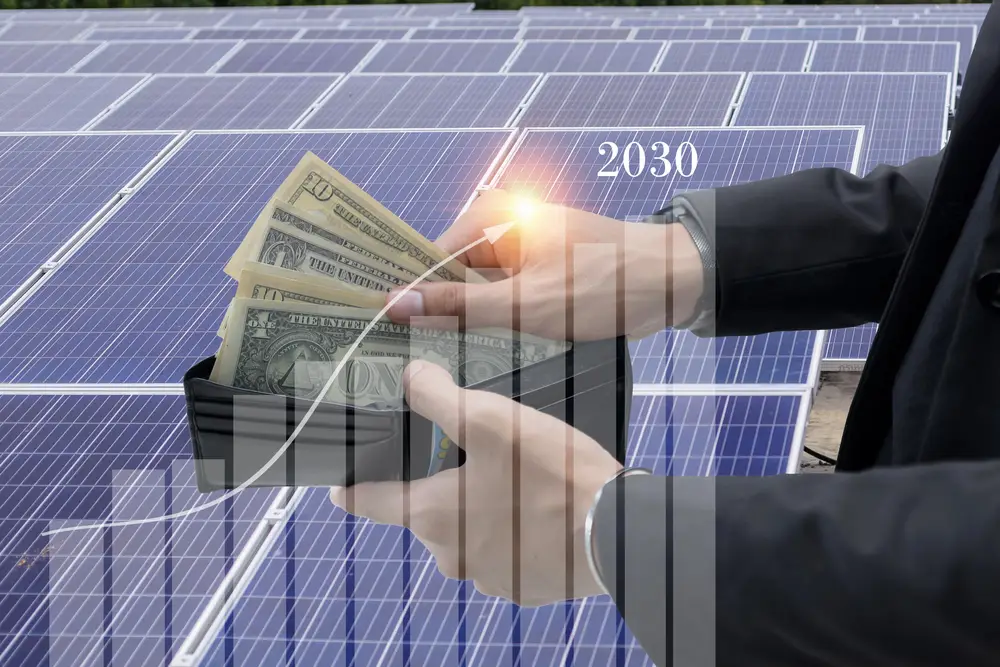
How to Calculate Your Payback Period
To calculate your payback period, you can start by subtracting any incentives or rebates that you qualify for from the total cost of your solar panels. You then divide the remaining costs by the amount you save on your electric bills every year. The final answer is the number of years it will take to get back your investment
Here’s a breakdown of how you can do the math:
- Total Cost of Installation – Rebates and Incentives = Investment
- Investment / Yearly Savings on Your Electric Bill = Solar Panel Payback Period
Before you calculate your payback period, you need to consider the following factors:
- Your electricity usage and rising rates.
- Total system cost.
- Solar tax credits, incentives, and rebates.
- The efficiency of your solar panels.
Be sure to speak to a professional for more information.
Factors That Influence Solar Payback Period
The payback period for solar panels is different for every homeowner, but there are a number of factors that can affect it. One of them is the total cost of your solar system, which will depend on the following factors:
- Its size (in kWh).
- The cost of the equipment installed.
- The installation company.
- Your financing methods (cash vs. solar loan).
Think of it as buying 25 years of electricity all at once. There will be some sticker shock . But if you break the cost down to years, months, days, and kilowatt-hours, it’s a lot cheaper than paying for grid electricity. It gets even cheaper if you take tax credits, rebates, and other incentives into consideration.
The 30% federal tax credit and other state rebates can be used to lower the upfront cost of installing solar panels, which can shorten your payback period. Without the 30% solar tax credit, the average homeowner would look at a payback period of 12-13 years. But by claiming this credit, it can be reduced to 9-10 years because it can add almost $8,000 to your energy savings.
Here are some other solar incentives that you should look into:
- State solar tax credits and rebates.
- Sales and property tax exemptions.
- County, city, and utility rebates.
- Solar Renewable Energy Credits (SRECs) and similar programs.
Your home’s energy consumption can have a huge impact on how much you will pay each month for electricity, so it can affect your potential savings. Most of the calculation methods for determining solar payback period also assume that your panels offset 100% of your energy usage. But because not all systems are designed to operate this way, it won’t always be true. Some will even produce more than you need, which will allow you to take advantage of net metering credits.
Your solar panels will also become less efficient over time, so you won’t save as much money as you get closer to the end of their life. It can make you more dependent on the grid, but modern solar panels can keep about 80% of their generation efficiency for their lifespan (which is an average of 25 years). This will be more than enough to reach your payback period.
The Payback Period for Solar Leases
Solar leases (which are also referred to as “power purchase agreements”) don’t have any upfront costs. You don’t own the panels on your roof, so you don’t pay for them. You just pay a monthly fee to use them. If they save you more money than it would cost to pay for them, you save overall.
Payback periods don’t apply to solar leases, because you don’t have to make any initial payment. But there are several factors that can determine how much money you save (or whether you will save any money at all). Leases usually include an annual escalator, which determines how much the cost of your lease will increase each year. If this rate of increase is less than your electricity rate, you’ll save more at the end of your lease than at the beginning. But if the cost of your lease increases at a faster rate than your electricity costs, the opposite will be true.
If you’re looking for one of the best places for solar panels in Corpus Christi, be sure to get in touch with Solar Power Integrator.